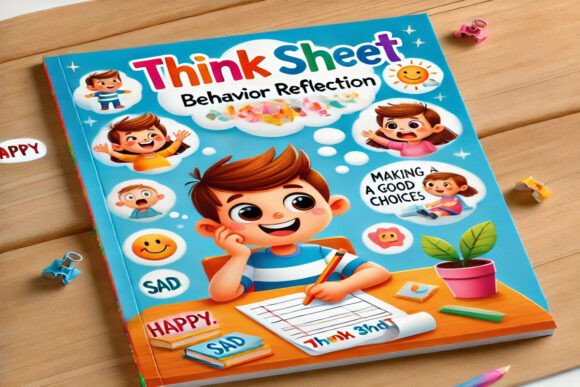
Think Sheet Behavior Reflection: A Practical Tool for Restorative Growth
Every educator, parent, and counselor knows the moment well. A child has made a poor choice, perhaps disrupting a lesson, hurting a friend's feelings, or breaking a rule. The immediate instinct is often to issue a consequence—a time-out, a detention, or a stern lecture. However, while consequences stop the behavior in the short term, they rarely teach the child how to make better choices next time. This is where the Think Sheet Behavior Reflection becomes an invaluable asset in modern classroom management and home discipline.
Unlike traditional punishment models that focus on what was lost, a Think Sheet focuses on what can be learned. It is a structured document designed to guide a child through a process of self-reflection, helping them understand the impact of their actions and formulate a plan for repair. When paired with restorative practices, it transforms a behavioral incident into a teachable moment about empathy, responsibility, and social-emotional learning (SEL).
Beyond Punishment: How the Think Sheet Works
The core philosophy behind the Think Sheet Behavior Reflection is simple: children need to pause and process before they can correct. In the heat of the moment, emotional regulation is difficult for even adults, let alone children in early elementary grades (K-3). The Think Sheet acts as a bridge between the impulsive action and the rational response.
Typically, these sheets ask a series of guided questions. Instead of asking "Why did you do that?"—which often triggers defensiveness—they ask, "What happened?", "Who was affected?", and "What could you do differently next time?" This shift in questioning moves the focus from blame to solution. For a child struggling with impulse control, seeing their thoughts written down helps externalize the problem, making it easier to analyze objectively.
This approach aligns perfectly with resources like Positive Behavior for Kids: A Fun Guide to Making Good Choices. While a book provides the foundational knowledge of kindness and respect, the Think Sheet offers the practical application when those lessons are tested. It turns abstract concepts like "teamwork" and "respect" into concrete actions a child can take to fix a mistake.
Real-World Scenarios: From Classroom to Home
The versatility of the Think Sheet Behavior Reflection makes it applicable across various environments. Its utility shines brightest in specific, high-friction scenarios where relationships have been strained.
The Classroom Disruption
In a busy K-3 classroom, a student might shout out during instruction or refuse to share materials. Rather than sending the child to the principal's office immediately, a teacher can use a Think Sheet at a quiet desk. The student completes the sheet, reflecting on how their shouting interrupted the learning of others. They then identify a specific apology or action to restore the flow of the class. This keeps the child engaged in the learning environment while addressing the behavior.
Playground Conflicts
Friendship skills are often tested on the playground. If two children argue over a game, leading to pushing or name-calling, a restorative Think Sheet can facilitate reconciliation. One section of the sheet often focuses on the "Apology." It guides the child to write or say exactly what they did wrong and how they will make it right. This prevents vague apologies like "I'm sorry" and encourages specific accountability, such as "I am sorry I pushed you. Next time, I will ask to wait my turn."
Home Dynamics
Parents dealing with sibling rivalry or defiance at home can also benefit. A family Think Sheet can be used after dinner table arguments or chores left undone. It shifts the dynamic from a power struggle to a collaborative problem-solving session. By involving the child in writing down the solution, parents empower them to take ownership of their household responsibilities.
Supporting Special Education and Diverse Learners
One of the most significant strengths of the Think Sheet Behavior Reflection is its adaptability for special education (SPED) and behavior intervention programs. Children with autism spectrum disorder, ADHD, or emotional regulation challenges often struggle to read social cues or understand cause-and-effect relationships in social interactions.
For these learners, verbal processing can be overwhelming. A visual, written format provides a necessary structure. Many effective Think Sheets include interactive elements, such as "Circle the Good Choices," which simplifies the cognitive load. Instead of generating an answer from scratch, the child selects the appropriate behavior from a list, reinforcing positive patterns through repetition. This scaffolding supports their journey toward self-discipline without demanding abilities they may not yet possess.
Counselors and SPED specialists often customize these sheets with pictures or simplified language for non-readers, ensuring that every child, regardless of ability level, has access to this restorative tool. It democratizes the opportunity for reflection, ensuring that behavioral expectations are clear and achievable for all students.
Considerations Before Implementation
While the benefits are clear, using a Think Sheet Behavior Reflection effectively requires thoughtful preparation. It is not a magic wand; it is a tool that must be wielded with care.
- Tone Matters: The sheet should never feel like a trap or a punitive interrogation. If a child feels threatened, they will shut down. The introduction of the activity must be calm and supportive, emphasizing growth rather than shame.
- Scaffolding is Key: For younger children or those with limited reading skills, the adult must be present to read the questions and help articulate answers. The goal is to model the thought process, not just fill out a form.
- Follow-Through: Completing the sheet is only half the battle. The "Restorative" part involves actually carrying out the plan. If a child writes an apology, they must deliver it. If they promise to clean up, they must do so. Without follow-through, the exercise loses its meaning.
- Consistency: Like any behavioral strategy, consistency builds trust. Using the Think Sheet sporadically can confuse children. It works best when integrated into a broader framework of Positive Behavior Interventions and Supports (PBIS).
Empowering Children Through Choice
Ultimately, the goal of tools like the Think Sheet Behavior Reflection and guides such as Positive Behavior for Kids is to foster independence. We want children who can look at a situation, recognize a mistake, and correct it without waiting for an adult to intervene. By practicing reflection regularly, children develop an internal compass for decision-making.
When a child successfully uses a Think Sheet to resolve a conflict, they experience a sense of agency. They realize that their actions matter and that they have the power to change outcomes. This builds self-esteem and resilience, essential traits for navigating school, home, and friendships. It teaches them that mistakes are not failures but opportunities to learn and grow stronger.
For teachers, parents, and counselors, integrating these resources into daily routines creates a culture of kindness and accountability. It moves the focus from policing behavior to cultivating character. Whether you are managing a bustling classroom or guiding a child through a tough day at home, the principles of restorative reflection offer a path forward—one thoughtful question at a time.