Daily Classroom Behavior Tracker: A Practical Guide for Educators
In the dynamic environment of a modern classroom, maintaining order and fostering positive growth requires more than just intuition; it demands consistent documentation. For teachers navigating the complexities of student interactions, a Daily Classroom Behavior Tracker serves as an essential instrument for clarity and progress. Whether you are managing a bustling general education room or providing specialized support in a special education setting, the ability to monitor, document, and encourage specific behaviors is fundamental to effective classroom management. This tool transforms subjective observations into actionable data, allowing educators to identify patterns, communicate effectively with parents, and tailor interventions that truly support student success.
The Core Purpose of Behavioral Documentation
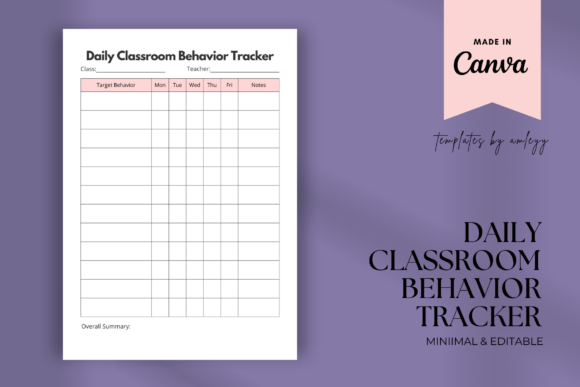
At its heart, a Daily Classroom Behavior Tracker Student Behavior Log Printable Digital Teacher Template Editable in Canva Behavior Management Tool is designed to bridge the gap between observation and action. Without a structured system, behavioral incidents can feel isolated and reactive. By utilizing a daily tracker, teachers shift from a reactive stance to a proactive one. The primary goal is not merely to record infractions but to capture the full spectrum of student conduct, including positive reinforcements, academic engagement, and social interactions.
This systematic approach supports positive behavior by making expectations visible and consistent. When students know their actions are being tracked fairly and transparently, it often encourages self-regulation. Furthermore, the data collected provides a historical record that is invaluable for Individualized Education Programs (IEPs), 504 plans, and parent-teacher conferences. It moves the conversation from "your child was bad today" to "here is a pattern we observed, and here is how we can work together to address it."
Key Features That Drive Effectiveness
The utility of a behavior tracker lies in its design and flexibility. A high-quality template includes several critical components that streamline the documentation process:
- Structured Time Blocks: Most effective trackers divide the school day into manageable segments, such as morning routine, core subjects, recess, and afternoon activities. This granularity helps pinpoint exactly when behavioral challenges arise.
- Customizable Fields: Sections for the student's name, date, specific behaviors observed, and detailed notes allow for comprehensive recording. Some templates also include a dedicated area for parent contact logs, ensuring communication is documented alongside behavior.
- Visual Clarity: A clean, intuitive layout reduces the cognitive load on the teacher. Instead of spending valuable instructional time deciphering complex forms, educators can quickly log data using checkboxes, scales, or brief text entries.
- Digital and Print Flexibility: Modern tools offer both PDF formats for printing and editable digital versions. This dual capability ensures that whether a teacher prefers pen and paper or uses a tablet during lessons, the workflow remains uninterrupted.
Leveraging Technology: The Canva Advantage
One of the most significant advancements in educational resources is the integration of design platforms like Canva. An Editable in Canva behavior tracker offers a level of customization that static PDFs cannot match. Teachers can easily modify colors to match their classroom theme, adjust fonts for readability, or add specific rubrics relevant to their curriculum. This adaptability is crucial because every classroom has unique needs.
For instance, a special education teacher might need to add visual cues or simplified language to the tracker, while a middle school teacher might prefer a more formal layout for adolescent students. The ability to edit these templates directly means that the tool evolves alongside the class. Additionally, the Instant Digital Download feature eliminates shipping delays, allowing educators to implement new systems immediately at the start of a term or even mid-year when adjustments are necessary.
Real-World Applications Across Educational Settings
The versatility of a Daily Classroom Behavior Tracker makes it suitable for a wide range of educational environments. Let's explore how different professionals utilize this resource:
- K-12 General Education Teachers: In large classes, keeping track of individual student progress can be overwhelming. A tracker allows teachers to focus on one student per week or use a rotating system to ensure every child receives attention. It helps in identifying subtle shifts in behavior before they escalate into major disruptions.
- Special Education Specialists: For students with IEPs, data is king. Behavioral interventionists rely on precise logs to measure the efficacy of specific strategies. If a student is working on reducing outbursts, the tracker provides the concrete evidence needed to adjust goals or celebrate milestones during team meetings.
- Behavioral Interventionists and Paraprofessionals: These staff members often work closely with students who have significant behavioral needs. A shared digital or printed log ensures that all staff members are on the same page, providing consistency across different settings within the school day.
Strategies for Implementation and Success
While the tool itself is powerful, its effectiveness depends on how it is implemented. Simply handing out a form does not guarantee improved behavior. To maximize the value of your Daily Classroom Behavior Tracker, consider the following practical steps:
Establish Clear Criteria: Before starting, define what constitutes a "positive," "neutral," or "negative" behavior. Ambiguity leads to inconsistent data. Ensure that the definitions align with your classroom rules and school-wide expectations.
Maintain Consistency: The tracker should be used daily, not just when problems occur. Documenting positive behaviors reinforces good habits and provides a balanced view of the student's day. Consistency builds trust with parents and students alike.
Involve the Student: Depending on the age group, sharing the tracker with the student can be empowering. It turns the log into a collaborative tool where the student can see their own progress and set personal goals.
Review and Reflect: Set aside time weekly to review the data. Look for trends. Does a student struggle specifically during transitions? Do certain triggers appear consistently? Use these insights to refine your teaching strategies or environmental setup.
Evaluating Suitability and Limitations
Like any educational tool, the Daily Classroom Behavior Tracker is not a magic bullet. It is important to understand its limitations. The quality of the data is only as good as the observer. If a teacher is biased or inconsistent in their logging, the resulting data will be skewed. Therefore, professional development on objective observation is often a prerequisite for successful implementation.
Furthermore, while digital tools offer convenience, they require access to technology and may present challenges in schools with limited internet connectivity or device availability. In such cases, the printable version remains a robust alternative. It is also worth noting that for students with severe behavioral disorders, a simple daily log may need to be supplemented with more intensive functional behavior assessments (FBAs).
When evaluating if this tool fits your needs, ask yourself: Do I need a way to organize my observations? Am I struggling to communicate specific behavioral patterns to parents? Do I require data to support IEP goals? If the answer is yes, then a customizable, easy-to-use tracker is likely a valuable addition to your toolkit.
Conclusion: Building a Foundation for Growth
Effective classroom management is rooted in understanding and responding to the needs of each student. A Daily Classroom Behavior Tracker provides the structure necessary to turn daily interactions into meaningful insights. By leveraging features like editable Canva templates, clear layouts, and flexible formats, educators can create a supportive environment where behavior is managed with empathy and precision.
Whether you are a seasoned veteran looking to refine your documentation or a new teacher establishing your classroom routines, this tool offers a pathway to greater organization and clearer communication. It empowers educators to move beyond guesswork, ensuring that every student receives the targeted support they need to thrive academically and socially. Ultimately, the goal is not just to track behavior, but to guide students toward becoming self-regulated, responsible individuals ready to succeed in school and beyond.