Building Independence with a Daily Visual Schedule for Kids
In the landscape of early childhood development and classroom management, few tools are as transformative as a visual aid. For educators, therapists, and parents alike, the challenge often lies not in what children need to do, but in how they understand and internalize the sequence of their day. A Daily Visual Schedule for Kids serves as a bridge between abstract time concepts and concrete actions, offering a structured pathway through the complexities of daily life. By translating verbal instructions into clear, colorful imagery, these schedules empower young learners from PreK through 4th grade to navigate their routines with confidence and autonomy.
The Cognitive Science Behind Visual Routines
Children, particularly those in the early developmental stages, process information differently than adults. While an adult might easily grasp a verbal instruction like "brush your teeth after breakfast," a child's brain often requires a more tangible representation of that sequence. This is where the power of visual learning comes into play. The human brain processes images significantly faster than text, and for developing minds, pictures serve as anchors for memory and understanding.
When implementing a Daily Visual Schedule for Kids, we are leveraging the principle of predictability. Uncertainty can be a major source of anxiety for children, leading to behavioral challenges or resistance to transition. A visual routine chart removes the ambiguity of "what happens next." It provides a roadmap that allows the child to anticipate upcoming events, reducing stress and fostering a sense of security. This is not merely about following rules; it is about cognitive scaffolding, where the visual aid supports the child until they have internalized the habit enough to operate independently.
Supporting Diverse Learning Needs
The utility of visual schedules extends far beyond general education. They are a cornerstone resource for children with special needs, including those on the autism spectrum, those with ADHD, or those experiencing language delays. For these students, non-verbal cues are often more effective than spoken words. A picture schedule eliminates the barrier of language processing, allowing the child to focus entirely on the task at hand.
In therapeutic settings, specialists use these charts to teach social skills and emotional regulation. When a child can see that "playtime" is followed by "quiet time," they can mentally prepare for the shift in energy levels required. This proactive approach to transitions is a critical component of successful classroom management and home stability. By making the invisible structure of time visible, we equip all children, regardless of their learning profile, with the tools they need to succeed.
Key Components of an Effective Picture Routine Chart
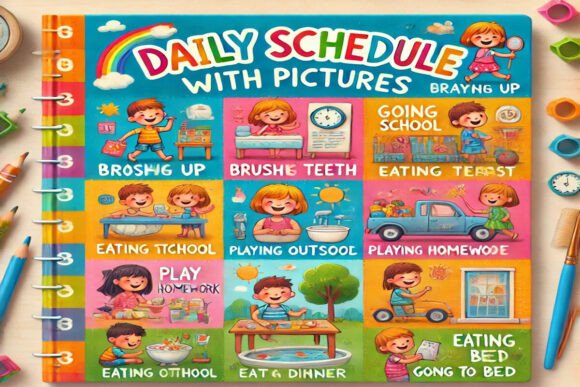
Not all visual aids are created equal. An effective Daily Visual Schedule for Kids must be designed with specific pedagogical principles in mind. The most successful resources combine clarity, engagement, and flexibility. Consider a comprehensive kit that includes 23 pages of distinct activities. These pages typically cover the essential pillars of a child's day: waking up, hygiene routines like brushing teeth, attending school or preschool, meal times, designated play periods, and the wind-down process for bedtime.
The visual quality of these cards is paramount. Bright, engaging visuals are not just aesthetically pleasing; they are functional. High-contrast colors and clear, recognizable icons help children quickly identify the activity without needing to decipher complex details. For example, a simple icon of a toothbrush and toothpaste is instantly understood across different age groups and cultures, whereas text-heavy descriptions might require reading proficiency that the child has not yet developed.
Interactive Elements and Engagement
Beyond static images, the most robust schedules incorporate interactive exercises. Questions embedded within the routine encourage active participation rather than passive observation. Instead of simply looking at a picture of "lunch," a child might be prompted to answer, "What did you eat?" or "Who did you sit with?" This interaction transforms the schedule from a checklist into a communication tool, reinforcing language skills and critical thinking alongside time management.
Furthermore, the format matters. Modern educational resources are available in versatile formats such as PDF, PNG, and JPG. This digital flexibility allows for easy printing and customization. Teachers can laminate the cards for repeated use in a classroom setting, while parents might print them weekly to adapt to changing weekend plans. The ability to move from digital to physical seamlessly ensures that the tool remains relevant and accessible in various environments.
Practical Applications in Home and School Environments
The versatility of a Daily Visual Schedule for Kids makes it an indispensable asset for both home and school. In the classroom, teachers utilize these charts to establish a consistent flow for the day. Morning arrival routines, circle time, independent work, recess, and dismissal can all be visually mapped out. This consistency helps reduce disruptions and allows the teacher to focus more on instruction and less on managing behavioral transitions.
For homeschooling parents, the dynamic is slightly different but equally impactful. Homeschooling requires a high degree of self-discipline even from young children. A visual routine chart acts as a gentle guide, helping children understand the balance between academic tasks and free play. It fosters a sense of ownership over their learning day, encouraging them to check off completed tasks and move forward with a sense of accomplishment.
Creating Structured Habits at Home
At home, the evening routine is often a battleground for families. The transition from the freedom of the day to the structure of bedtime can be difficult. A visual schedule placed prominently in the child's room or bathroom can streamline this process. Seeing the sequence—dinner, bath, pajamas, story, sleep—helps the child understand that these steps are non-negotiable parts of the day, not arbitrary demands from parents.
This tool also supports the development of independence. As children become familiar with their schedule, they begin to rely less on parental prompts. They learn to look at the chart, identify the current activity, and initiate the next step. This shift from external regulation to self-regulation is a fundamental milestone in child development. It teaches time management skills in a playful, low-pressure environment, laying the groundwork for executive functioning abilities that will serve them throughout their lives.
Implementing Visual Schedules for Maximum Impact
To get the most out of a Daily Visual Schedule for Kids, implementation strategy is key. Simply hanging a chart on the wall is not enough; it must be integrated into the daily rhythm of the household or classroom. Start by involving the child in the setup. Let them choose which icon represents their favorite snack or help them place the first card of the morning routine. This involvement increases buy-in and makes the schedule feel like a collaborative effort rather than a top-down mandate.
Consistency is the other pillar of success. The schedule should remain in a fixed location where the child can access it easily. Review the chart together at the beginning of the day and reference it during transitions. If a change occurs, such as a doctor's appointment replacing playtime, update the visual immediately. This demonstrates that the schedule is a living document that reflects reality, maintaining its credibility with the child.
Adapting to Growth and Change
As children grow from PreK to 4th grade, their needs evolve. A schedule that works for a three-year-old may need modification for a seven-year-old. Younger children benefit from large, simple images and fewer steps, while older children can handle more complex sequences and perhaps even written labels alongside the pictures. The best resources allow for this scalability.
Therapists and specialists often recommend starting with a highly structured routine and gradually fading the support as the child gains competence. This might mean moving from a full-day schedule to just a morning routine, or transitioning from moving physical cards to checking items off a list. The ultimate goal is always independence, and the visual schedule is the training wheels that make that journey possible.
Long-Term Benefits of Structured Routines
The impact of using a Daily Visual Schedule for Kids extends well beyond the immediate reduction in morning chaos or smoother classroom transitions. Over time, these tools contribute to significant developmental gains. Children who grow up with structured visual routines tend to exhibit better organizational skills, improved attention spans, and higher levels of self-confidence.
They learn that their actions have consequences and that there is a logical order to the world around them. This understanding reduces anxiety and creates a stable foundation upon which they can build new skills. Whether it is mastering the art of packing a backpack or managing homework assignments, the foundational skill of following a sequence learned through visual schedules translates into broader life competencies.
For educators and parents, investing time in creating and maintaining these visual aids is an investment in the child's future. It is a practical, evidence-based approach to nurturing capable, independent individuals. By embracing the power of visual communication, we provide children with a clear lens through which to view their day, turning potential confusion into clarity and hesitation into action.