Visualizing Learning: How Educational Graphics Transform the Classroom Experience
In the modern landscape of learning, information is abundant, but understanding remains a challenge. The bridge between raw data and genuine comprehension is often built with visual storytelling. Educational activities have evolved far beyond simple textbooks and chalkboards; they now rely heavily on dynamic imagery to capture attention and facilitate retention. Dive into the captivating universe of knowledge with our graphics collection that beautifully encapsulates the enlightening world of education. These visuals are not merely decorative; they are functional tools designed to simplify complexity, spark curiosity, and foster a collaborative spirit among learners.
Whether you are an educator designing a lesson plan, a content creator building an online course, or a parent seeking engaging materials for your child, the power of well-curated graphics cannot be overstated. This article explores how these visual assets bring educational narratives to life, moving seamlessly from the intricate details of human biology to the foundational joy of literacy.
The Anatomy of Understanding: From Complex Science to Clear Concepts
One of the most significant hurdles in education is explaining complex scientific concepts without overwhelming the student. Take, for example, the study of human anatomy. For decades, this subject was relegated to dense text and static, two-dimensional diagrams that often failed to convey the three-dimensional reality of the body. Today, high-quality educational graphics change the narrative entirely.
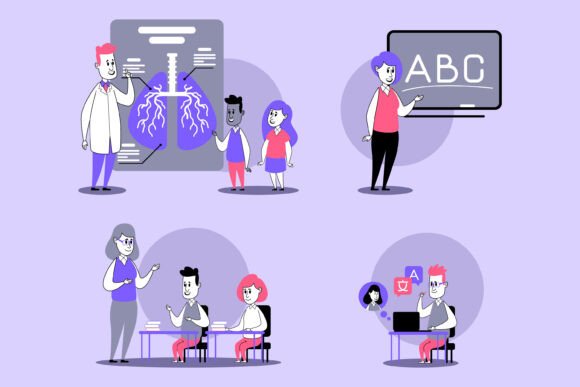
Imagine a classroom where the mystifying intricacies of human anatomy are displayed as detailed by a knowledgeable MD. Instead of struggling to visualize muscle layers or nerve pathways from a paragraph description, students interact with vibrant, accurate illustrations. These graphics break down the biological machine into understandable components. They highlight the relationship between the skeletal system and the muscular system, showing movement and function rather than just structure.
- Simplification of Complexity: Detailed anatomical charts can isolate specific systems, such as the circulatory or nervous system, allowing students to focus on one area at a time.
- Accuracy and Trust: When graphics are vetted by medical professionals, they provide a level of accuracy that builds trust and ensures students are learning correct terminology and relationships.
- Engagement: Color-coded diagrams make dry facts memorable, turning a rote memorization task into an exploratory journey through the human body.
This approach aligns with the principle of dual coding theory, which suggests that combining verbal and visual information leads to better recall. By harnessing the power of these graphics, educators can paint an enthralling picture of biological processes, making the abstract concrete and the difficult accessible.
Foundations of Literacy: The Joy of Early Learning
While advanced science requires precision, early childhood education thrives on charm and enthusiasm. The transition from illiteracy to reading is a magical milestone, and the tools used to facilitate it must reflect that wonder. Our graphics collection captures this perfectly by showcasing the charm of the basic ABCs being enthusiastically introduced by a spirited teacher.
In the early stages of learning, engagement is paramount. A black-and-white worksheet rarely inspires the same excitement as a colorful, animated graphic featuring friendly characters or vibrant letters. Visual aids help young learners associate sounds with symbols, a critical step in developing literacy skills. When a teacher uses a graphic that features a playful "A" for Apple alongside a smiling character, the lesson becomes a story rather than a chore.
This method does more than just teach letters; it fosters a love for learning. It creates a positive emotional association with the classroom environment. Parents and educators alike recognize that the tone of the material matters as much as the content. A spirited, visually rich approach encourages children to participate actively, ask questions, and explore language with confidence.
Key Benefits of Visual Literacy Tools
- Pattern Recognition: Bright, distinct graphics help children distinguish between similar-looking letters and numbers.
- Contextual Learning: Images provide context, helping children understand that words represent real-world objects.
- Motivation: Fun visuals keep young minds engaged longer, reducing behavioral issues associated with boredom.
Fostering Collaboration: The Power of Collective Study
Education is inherently social. While individual study has its place, the most profound learning often occurs when students work together. This is where the unique delight of seeing students actively participating in collective study sessions comes into play. Modern educational graphics are increasingly designed to depict and encourage this type of interaction.
Visuals that show groups of students collaborating around a whiteboard, sharing ideas, or solving problems together serve a dual purpose. First, they act as instructional models, showing learners what effective collaboration looks like. Second, they reinforce the cultural value of teamwork within the educational institution. When students see themselves represented in these graphics—diverse, engaged, and working together—it validates their role in the learning community.
This carefully curated graphics set captures the pulse of an engaging education system, one that promotes active participation and stimulates curiosity. In a world where remote learning and hybrid models are becoming common, these images remind us of the importance of connection. They inspire teachers to design group activities and students to seek out peer support. Whether it is a project-based learning scenario or a simple peer-review session, the visual representation of collaboration sets the stage for success.
Practical Relevance in Modern Education and Business
The utility of these educational graphics extends far beyond the traditional school walls. In the corporate world, training and development programs are adopting similar strategies to upskill employees. Just as a student needs clear visuals to understand anatomy, an employee needs intuitive infographics to grasp new software protocols or safety regulations.
Furthermore, the rise of e-learning platforms has made high-quality visuals an essential asset. Content creators use these graphics to break up long-form text, maintain viewer attention, and improve SEO performance on educational websites. Search engines favor content that keeps users on the page longer, and engaging visuals are a primary driver of dwell time.
For businesses looking to communicate their commitment to education and growth, these images tell a powerful story. They signal that an organization values clarity, innovation, and the continuous development of its people. Whether you are creating a presentation for investors, a brochure for a tutoring center, or a blog post about study techniques, the right image can elevate your message from informative to inspiring.
Common Misconceptions About Visual Learning
Despite the clear benefits, there are still misunderstandings regarding the role of graphics in education. One common assumption is that visuals are merely "fluff"—decorative elements added to make things look pretty. In reality, cognitive science proves that relevant visuals reduce cognitive load. When the brain processes an image, it often understands the concept faster than if it had to decode a paragraph of text first.
Another misconception is that visuals replace the need for teaching. Nothing could be further from the truth. Graphics are tools that empower educators, not replacements for them. A diagram of the heart is useless without a guide to explain the flow of blood. The synergy between a knowledgeable instructor and high-quality graphics creates the most effective learning environment.
Additionally, some believe that visual learning only applies to younger students. However, adults benefit just as much from visual aids. In professional settings, complex data is almost always presented through charts and graphs because it allows for quicker decision-making. The principles of visual communication are universal across all age groups and disciplines.
Bringing Your Educational Narratives to Life
As we navigate an increasingly digital and visual world, the ability to communicate complex ideas clearly is more valuable than ever. An essential asset for those looking to depict the dynamic, multifaceted world of education, our graphics collection offers a versatile toolkit for storytellers and educators alike.
From the rigorous detail of medical diagrams to the joyful simplicity of alphabet lessons, these images cover the full spectrum of the learning journey. They invite us to rethink how we present information, encouraging a shift from passive consumption to active exploration. By integrating these visuals into your curriculum, marketing materials, or personal projects, you are not just adding pictures; you are enhancing the very fabric of understanding.
Harness the power of these graphics to bring your educational narratives to life. Let them stimulate curiosity, promote collaboration, and illuminate the path to knowledge. In doing so, we create a richer, more engaging experience for everyone involved in the beautiful pursuit of learning.