Educational Activities in Vibrant Learning Environments
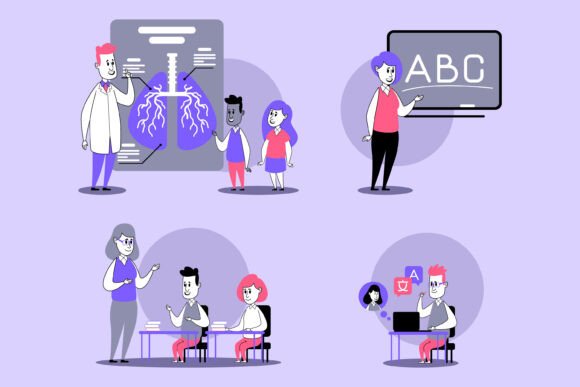
The landscape of modern education has shifted dramatically from the rigid rows of silent desks to dynamic spaces where interaction, collaboration, and energy define the learning process. At the heart of this transformation are Educational Activities in Vibrant settings that foster deep engagement and critical thinking. These environments do not merely house students; they actively participate in the educational journey, creating a backdrop where curiosity thrives and knowledge is co-constructed. When we observe a diverse group of individuals engaged in various educational activities, we see more than just a classroom scene; we witness the intricate dance of human connection and intellectual growth.
The Anatomy of an Active Learning Space
An active learning environment is characterized by its flexibility and the intentional design of social interactions. Unlike traditional lecture halls where information flows unidirectionally from instructor to student, vibrant classrooms operate on a multidirectional model. Here, the dedicated teacher acts less as a sole authority and more as a facilitator or guide, presenting subjects while encouraging inquiry. The physical space often reflects this philosophy, featuring movable furniture, collaborative zones, and visual aids that stimulate the senses.
In these settings, you will frequently find intimate clusters of learners collaborating in smaller groups. This arrangement allows for peer-to-peer teaching, debate, and problem-solving. The noise level might be higher than in a quiet library, but it is the sound of productive struggle and shared discovery. This atmosphere is crucial because it mirrors real-world professional environments where teamwork and communication are paramount. By immersing oneself in such a setting, learners develop not only subject matter expertise but also the soft skills necessary for navigating complex social and professional landscapes.
Key Elements of Engagement
- Diverse Group Dynamics: Bringing together individuals with different backgrounds, strengths, and perspectives enriches the learning experience. Diversity challenges assumptions and fosters empathy.
- Collaborative Clusters: Small group work encourages accountability and allows students to take ownership of their learning tasks.
- Facilitated Instruction: Teachers who move among groups provide targeted support rather than broad lectures, ensuring no learner is left behind.
- Visual and Tactile Stimuli: Richly detailed graphics, models, and interactive tools help visualize abstract concepts, making them accessible to all learning styles.
From Passive Reception to Active Participation
The transition from passive reception to active participation is the defining feature of Educational Activities in Vibrant contexts. In a traditional model, students are often expected to listen, memorize, and regurgitate. While foundational knowledge is important, this approach rarely leads to deep understanding or long-term retention. In contrast, active learning requires students to engage with the material through doing, discussing, and creating.
Consider a science lesson where, instead of reading about chemical reactions, students mix compounds in small groups to observe the results firsthand. Or imagine a history class where learners role-play historical figures to understand the motivations behind significant events. These activities transform abstract concepts into tangible experiences. The "vibrant" aspect comes from the energy generated when learners are personally invested in the outcome. They are not just observers; they are architects of their own understanding.
This shift also benefits educators. By stepping back and observing the clusters of learners, teachers gain immediate insight into student comprehension. They can identify misconceptions in real-time and adjust their instruction accordingly. This feedback loop creates a responsive and adaptive learning ecosystem that is far more effective than static curriculum delivery.
Practical Applications Across Disciplines
The principles of vibrant, active learning are applicable across a wide range of disciplines, proving their versatility and universal value.
- STEM Education: Project-based learning allows students to apply mathematical and scientific principles to solve engineering challenges. Collaborative coding sessions or robotics competitions exemplify this approach.
- Humanities and Arts: Socratic seminars and creative workshops encourage students to analyze texts, critique art, and express their interpretations. The focus is on dialogue and the exchange of ideas.
- Language Acquisition: Immersive language labs and conversation circles force learners to use new vocabulary in context, accelerating fluency through practice and interaction.
- Professional Development: Corporate training programs increasingly utilize simulation and scenario-based learning to prepare employees for real-world business challenges.
The Power of Collective Intelligence
One of the most profound aspects of Educational Activities in Vibrant environments is the harnessing of collective intelligence. When a diverse group of individuals engages in various educational activities, the sum of their insights often exceeds what any single individual could achieve alone. This phenomenon, known as the synergy of collaboration, is central to the beauty of collective learning.
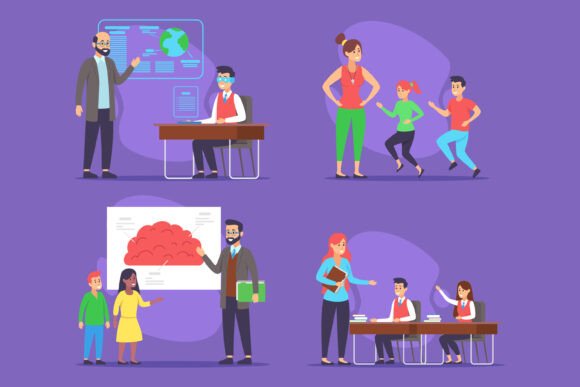
In these intimate clusters, learners teach one another. Explaining a concept to a peer reinforces the explainer's understanding while clarifying doubts for the listener. This reciprocal relationship builds a community of trust and mutual respect. It dismantles the hierarchy often found in traditional education, replacing it with a network of shared responsibility. The graphic depiction of such scenes serves as a poignant reminder that knowledge is not a finite resource to be hoarded but a living entity that grows when shared.
Furthermore, this collective approach prepares learners for the future of work. In an increasingly interconnected global economy, the ability to collaborate across cultures and disciplines is a critical competency. Students who grow up in vibrant learning communities are better equipped to navigate ambiguity, negotiate differences, and innovate together. They learn that failure is not a dead end but a shared opportunity for reflection and improvement.
Observations on Student Well-being
Beyond academic outcomes, the emotional and psychological well-being of students is significantly impacted by the nature of their learning environment. A vibrant atmosphere reduces feelings of isolation and anxiety that can plague traditional, high-pressure classrooms. When students feel seen, heard, and valued as part of a community, their motivation increases.
The sense of belonging is a powerful driver of engagement. In a setting where every voice matters, shy students may find the courage to speak up, and dominant personalities learn the value of listening. This balance creates a safe space for risk-taking, which is essential for creativity and deep learning. Educators and administrators must recognize that fostering a positive social climate is just as important as delivering rigorous content.
Designing for Inclusivity and Accessibility
To truly realize the potential of Educational Activities in Vibrant settings, inclusivity must be at the forefront of design and implementation. A vibrant classroom is one where every learner, regardless of ability, background, or learning style, can participate fully. This requires intentional planning and a commitment to equity.
Accessibility in this context goes beyond physical ramps and elevators. It involves providing multiple means of representation, engagement, and expression. For example, using richly detailed graphics and multimedia resources can support visual learners, while hands-on activities benefit kinesthetic learners. Providing options for group roles ensures that students with different strengths can contribute meaningfully. Some may excel at research, others at presentation, and still others at organization.
Cultural responsiveness is another critical component. Educational activities should reflect the diverse realities of the student body. Incorporating stories, examples, and perspectives from various cultures validates the identities of all learners and broadens the horizons of the entire group. When students see themselves reflected in the curriculum, their engagement deepens, and the learning community becomes richer.
Challenges and Considerations
While the benefits of active, vibrant learning are clear, implementing such environments is not without challenges. Transitioning from traditional methods requires a shift in mindset for both educators and students. Teachers may need professional development to master facilitation techniques and manage the dynamics of group work effectively. Students accustomed to passive learning may initially resist the responsibility of active participation.
Resource constraints can also pose obstacles. Creating flexible learning spaces often requires investment in furniture, technology, and materials. However, many strategies for active learning rely more on pedagogical shifts than expensive equipment. Simple changes, such as rearranging desks into pods or incorporating structured discussion protocols, can yield significant improvements.
Assessment is another area that requires rethinking. Traditional tests may not capture the full scope of learning that occurs in collaborative, project-based settings. Educators must develop rubrics and evaluation methods that measure process, collaboration, and application alongside content knowledge. This holistic approach provides a more accurate picture of student growth and capabilities.
Future Trends in Dynamic Education
As we look toward the future, the integration of technology will further enhance Educational Activities in Vibrant environments. Virtual reality (VR) and augmented reality (AR) offer new ways to immerse learners in historical events, scientific phenomena, or distant ecosystems. These tools can bring the world into the classroom, making learning even more experiential and engaging.
Artificial intelligence (AI) can personalize learning pathways, allowing students to progress at their own pace while still benefiting from collaborative group work. AI-driven analytics can help teachers monitor group dynamics and identify students who may need additional support. However, technology should always serve the human element of education, enhancing rather than replacing the vital interactions between people.
The ultimate goal remains the same: to create learning communities that celebrate the unique dynamics that make every learner extraordinary. Whether in a K-12 classroom, a university lecture hall, or a corporate training center, the essence of education lies in the human connection. By embracing vibrant, active, and inclusive approaches, we can unlock the full potential of every individual and build a more knowledgeable, empathetic, and innovative society.
The journey toward this vision is ongoing, requiring continuous reflection, adaptation, and commitment. But as we witness the power of shared knowledge and the beauty of collective learning, it becomes clear that the future of education is not just about what we know, but how we learn together. In these vibrant spaces, the magic of education truly comes to life.