Mastering the Basics: A Comprehensive Guide to Short A Vowel CVC Words Worksheets
In the journey of early literacy, few milestones are as critical as the moment a child transitions from recognizing letters to decoding words. This pivotal shift often begins with the Short A vowel worksheets, a foundational tool designed to build phonetic competency in young learners. For Kindergarten and First-grade educators, parents, and tutors, understanding the mechanics and benefits of these resources is essential for fostering a love of reading. By integrating these versatile materials into daily instruction, we can transform abstract letter sounds into concrete language skills that serve students throughout their academic lives.
The Foundation of Phonics: Understanding CVC Words
Before diving into specific worksheets, it is crucial to understand the concept they address: CVC words. The acronym stands for Consonant-Vowel-Consonant. These are three-letter words where the middle letter represents a short vowel sound. In the case of our focus, the "A" makes its classic short sound, heard in words like cat, hat, bat, and mat.
Why start here? CVC words provide the simplest structure for children to practice blending sounds together. Unlike complex words with silent letters or digraphs, CVC words follow a predictable pattern. When a child learns to isolate the /c/, /a/, and /t/ sounds and blend them smoothly, they experience the "aha!" moment of reading. This success builds confidence and establishes the neural pathways necessary for tackling more complex phonics rules later on.
The Significance of the Short A Sound
The short "A" sound is one of the first vowels introduced in most phonics curriculums because of its frequency in early vocabulary. It appears in high-frequency nouns (animal names, clothing items) and action verbs. Mastery of this sound allows children to read a surprising number of words early in their education. However, without targeted practice, students may struggle to distinguish between long and short vowel sounds, leading to confusion when encountering words like "cake" versus "cat."
Short A Vowel CVC words worksheets are specifically engineered to clarify this distinction. Through repetition and visual association, these tools help cement the correct pronunciation and spelling patterns in a child's memory.
Elevating Early Literacy Instruction with Targeted Resources
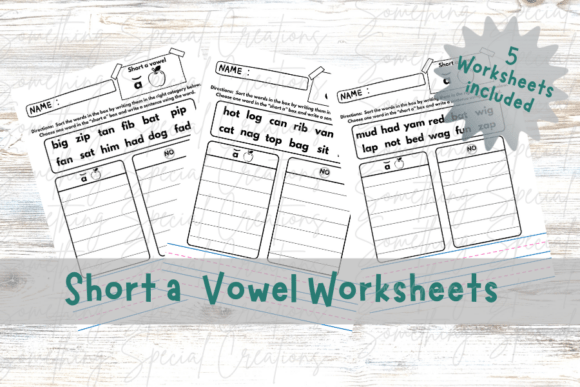
Modern education demands resources that are not only educational but also engaging. The era of rote memorization is giving way to interactive learning experiences that capture a child's imagination. Our set of five distinct worksheets offers a perfect blend of engagement and education, tailored to meet the diverse needs of early years classrooms and home-schooling environments.
These resources are designed with flexibility in mind. Whether you are looking for a quick morning starter to wake up the brain, a structured activity for learning centers, or a meaningful assignment for homework, these worksheets adapt seamlessly. They move beyond simple drills, incorporating elements of creativity and problem-solving that keep young minds active and curious.
How the Five-Worksheet Set Works
Each worksheet in the collection serves a unique purpose while reinforcing the same core skill: the mastery of the short "A" sound. Here is how they fit into a comprehensive lesson plan:
- Visual Identification: One worksheet focuses on matching pictures to words. Children see an image of a rat and must circle the word "rat" among distractors like "rot" or "rut." This strengthens the connection between visual symbols and phonetic sounds.
- Blending Practice: Another sheet guides students through the process of sounding out words. Using dotted lines or color-coded letters, it encourages the physical act of blending /b/ + /a/ + /g/ to say "bag."
- Word Building: Students might be given a list of consonants and asked to create new words by changing the beginning or ending letter. For example, changing the "m" in "man" to "f" creates "fan." This teaches the concept of word families.
- Writing and Spelling: To reinforce motor skills alongside phonics, a worksheet may ask children to trace or write their own short "A" words, ensuring they understand the letter formation associated with the sound.
- Contextual Application: The final worksheet often places these words in simple sentences or stories, helping children understand how these words function within the broader context of communication.
Practical Applications in the Classroom and Home
The versatility of Short A Vowel CVC Words Worksheets makes them an asset for any setting. In a busy classroom, time is a precious commodity. Teachers can use these printables to differentiate instruction. Advanced readers can work on writing sentences using the words, while those who need extra support can focus on identifying the pictures and matching them to the correct text.
For parents at home, these worksheets offer a structured way to support their child's learning without requiring extensive preparation. They turn homework time into a collaborative activity. Instead of simply asking, "Did you do your work?", a parent can sit down and say, "Let's find all the animals that have a short 'A' sound in their name."
Integrating Technology and Creativity
While these are traditional paper-based resources, they fit perfectly into a modern, tech-enhanced learning environment. After completing a worksheet, students can take a photo of their work to share on a digital class board or record themselves reading the words aloud. Furthermore, teachers can encourage creativity by having students draw their own illustrations for the words they have written, turning a literacy exercise into an art project.
This integration helps bridge the gap between analog and digital learning, ensuring that students develop a holistic skill set. It demonstrates that literacy is not just about decoding text on a page but about communicating ideas across various mediums.
Common Misunderstandings and Clarifications
Despite their effectiveness, there are some common misconceptions about using phonics worksheets. One frequent assumption is that worksheets are merely "busy work" that lack depth. However, when designed with pedagogical intent—as our Short A set is—they are powerful diagnostic tools. They allow educators to quickly identify which students are struggling with specific blends or vowel sounds, enabling timely intervention.
Another misunderstanding is that once a child knows the short "A" sound, they are done with it. In reality, mastery requires consistent review. The short "A" sound appears in thousands of words, and exposure to it in different contexts is vital. These worksheets are not a one-time fix but a recurring resource that should be revisited throughout the year to ensure retention.
Furthermore, some believe that phonics instruction stifles creativity. On the contrary, mastering the code of language frees the mind. When decoding becomes automatic, children can focus their cognitive energy on comprehension, storytelling, and creative expression. They are no longer stuck on "what does this word say?" but can move immediately to "what does this story mean?"
Building a Broader Understanding of Language Fundamentals
Ultimately, the goal of using Short A Vowel CVC words worksheets extends far beyond the immediate ability to read "cat" or "bat." It is about building a robust foundation for all future literacy. The skills developed during these exercises—attention to detail, pattern recognition, auditory discrimination, and fine motor control—are transferable to every subject area.
As students progress from Kindergarten to First grade and beyond, the complexity of the texts they encounter increases. However, the fundamental principles remain the same. A strong grasp of short vowels ensures that students approach long words with confidence, breaking them down into manageable chunks based on the patterns they learned early on.
For educators and parents, investing time in these foundational activities is an investment in a child's lifelong relationship with reading. By utilizing high-quality, engaging resources like our five-worksheet set, we empower young learners to unlock the world of books, one short "A" sound at a time. Transform your teaching toolkit today and watch as your students' mastery of language fundamentals flourishes.
Conclusion: A Vital Tool for Every Educator
In conclusion, the journey to literacy is built brick by brick, and the short "A" vowel is one of the most important bricks in that wall. Short A Vowel CVC Words Worksheets provide the scaffolding necessary for children to construct their reading abilities securely. Whether used in a bustling classroom, a quiet home study, or a remote learning setup, these resources offer a proven path to success. By embracing these tools, we ensure that every child has the opportunity to become a confident, capable reader, ready to explore the endless possibilities that language offers.