Math Formula: Mathematics Calculus on the Modern Mind
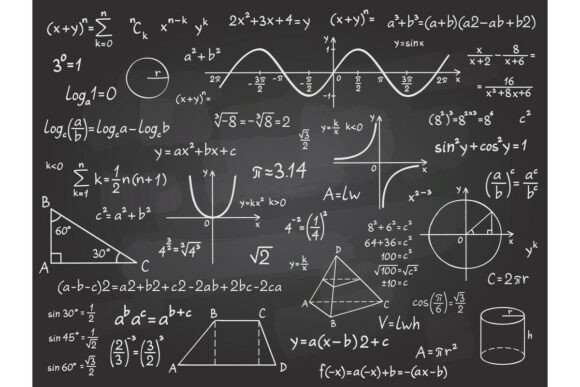
When we visualize the concept of Math Formula. Mathematics Calculus on, our minds often drift back to a specific sensory experience: the sharp scent of chalk dust, the rhythmic scratching against a slate surface, and the intricate dance of variables forming complex equations on a school blackboard. This imagery is not merely nostalgic; it represents the foundational moment where abstract logic meets tangible representation. However, the evolution from static chalk patterns to dynamic digital algorithms has transformed how we interact with scientific analysis, number calculation, and complex knowledge in the twenty-first century. The principles that once governed the motion of planets or the trajectory of projectiles now underpin the recommendation engines of social media, the risk models of financial institutions, and the generative capabilities of artificial intelligence.
The relevance of calculus and algebraic structures extends far beyond the classroom walls. In today's fast-paced professional landscape, understanding the underlying mechanics of these mathematical concepts is no longer just for scientists and engineers. For entrepreneurs, marketers, creators, and business owners, the ability to interpret data trends, optimize workflows, and understand probability is a direct application of the same logical frameworks found in those old vector education concepts. We are living in an era where the "school blackboard" has been digitized, yet the fundamental need for rigorous scientific analysis remains unchanged.
From Chalk Dust to Digital Code: The Evolution of Mathematical Visualization
The transition from traditional teaching methods to modern computational tools marks a significant shift in how we approach problem-solving. Historically, the Math formula. Mathematics calculus on school blackboard served as a communal space for discovery. A teacher would draw a curve, define a limit, and students would watch the geometry unfold in real-time. This process emphasized the visual relationship between algebra and geometry, creating a mental model of how changing one variable affects another.
Today, this visualization happens at lightning speed within software interfaces. Where a student once spent hours calculating derivatives by hand, modern professionals use computational tools to simulate thousands of scenarios in seconds. Yet, the core concept remains identical. The "chalk pattern vector" has become the line graph on a dashboard, the heat map in a marketing campaign, or the neural network architecture in machine learning. The medium has changed, but the language of mathematics continues to describe the universe around us with precision.
This evolution reflects a broader trend in professional development. There is a growing demand for "mathematical literacy" among non-mathematicians. Professionals are expected to navigate complex datasets and understand the implications of algorithmic decisions. The ability to look at a complex equation and grasp its practical implication—whether it is the rate of change in customer acquisition costs or the optimization of supply chain logistics—is a critical skill derived from the same educational roots as high school calculus.
The Enduring Power of Algebraic Logic in Business Strategy
In the realm of business and entrepreneurship, algebra serves as the backbone of strategic planning. At its heart, algebra is about solving for the unknown. When a startup founder analyzes unit economics, they are essentially setting up an equation where revenue, cost, and growth rate are variables. The goal is to find the equilibrium point where the business becomes sustainable.
Consider the concept of marginal utility, a principle deeply rooted in calculus. For a product manager, understanding the diminishing returns of additional features is crucial. Just as a derivative tells you the instantaneous rate of change, analyzing user engagement data helps determine when adding more complexity stops yielding value and begins to detract from the user experience. This is the practical application of scientific analysis in a commercial context.
Furthermore, the "complex knowledge" associated with advanced mathematics translates into better decision-making under uncertainty. Probability theory and statistics, which rely heavily on calculus, allow businesses to model risk. Whether it is a financial analyst predicting market volatility or a project manager estimating timeline slippage, the ability to quantify uncertainty provides a competitive edge. It moves decision-making from gut feeling to evidence-based strategy.
Modern Workflows and the Integration of Scientific Analysis
The integration of mathematical thinking into modern workflows is reshaping how industries operate. In the creative sector, for instance, design is increasingly driven by parametric modeling. Architects and graphic designers use algorithms to generate forms that would be impossible to draft manually. Here, the Algebra and geometry science chalk pattern vector education concept comes full circle. The geometric rules taught in school are now encoded into software that allows for infinite iteration and optimization.
For content creators and marketers, the influence is equally profound. The algorithms that govern search engine rankings and social media feeds are built on sophisticated mathematical models. Understanding the basics of how these systems prioritize content—often based on rates of engagement, velocity of sharing, and network effects—allows creators to align their strategies with the underlying logic of the platform. It is not about "gaming" the system, but rather understanding the mathematical ecosystem in which the content exists.
This shift requires a new kind of adaptability. Professionals must be comfortable with tools that automate the heavy lifting of calculation while retaining the conceptual understanding to interpret the results. A marketer does not need to derive the logistic regression function used in predictive analytics, but they do need to understand what the output means for their target audience segmentation. This balance between technical automation and human insight is the hallmark of the modern workforce.
Education and the Future of Learning Complex Knowledge
The way we teach and learn mathematics is also undergoing a transformation. The rigid separation between subjects like algebra, geometry, and calculus is blurring in favor of interdisciplinary approaches that emphasize application. Educational platforms are moving away from rote memorization of formulas toward interactive simulations that demonstrate the power of number calculation in real-world scenarios.
This pedagogical shift mirrors the needs of the adult learner. Professionals returning to education seek immediate applicability. They want to know how a mathematical concept solves a current problem. The "school blackboard" metaphor is evolving into a collaborative digital workspace where teams can visualize data, test hypotheses, and iterate solutions together. The focus is on the process of inquiry and the rigor of analysis rather than just the final answer.
Moreover, the accessibility of mathematical tools has democratized complex knowledge. Open-source libraries and cloud-based computing platforms allow individuals to perform calculations that were once the domain of supercomputers. This accessibility empowers hobbyists, freelancers, and small business owners to engage in deep scientific analysis without needing a dedicated research team. It fosters a culture of experimentation and innovation where mathematical thinking is a shared resource.
Practical Implications for the Curious Professional
For the individual navigating this landscape, the takeaway is clear: mathematical fluency is a form of leverage. It does not require becoming a mathematician, but rather developing a mindset that values precision, logic, and evidence. Whether you are analyzing a spreadsheet, designing a user interface, or planning a marketing budget, the principles of Math Formula. Mathematics Calculus on provide a framework for clarity.
Start by observing the patterns in your own work. Identify the variables that drive your outcomes and consider how they interact. Ask questions about rates of change: Is my productivity increasing or decreasing? What is the threshold where a new investment yields positive returns? These are the questions of calculus applied to daily life.
Embrace the tools available to you. Use data visualization software to turn raw numbers into understandable stories. Leverage automation to handle repetitive calculations, freeing up your mental energy for strategic thinking. And most importantly, maintain a curiosity about the "why" behind the numbers. The world is increasingly quantified, and those who can read the language of mathematics will be best equipped to shape the future.
The journey from the chalk-dusted blackboard to the digital frontier illustrates the enduring power of mathematical thought. It is a discipline that bridges the gap between abstract theory and concrete reality. As we move forward, the ability to harness this knowledge will define not only technological advancement but also the quality of our decision-making in every aspect of life. The equations may have changed form, but the pursuit of understanding remains the same.